Publications
Books, peer-reviewed papers and conference presentations by Bernard Seytre
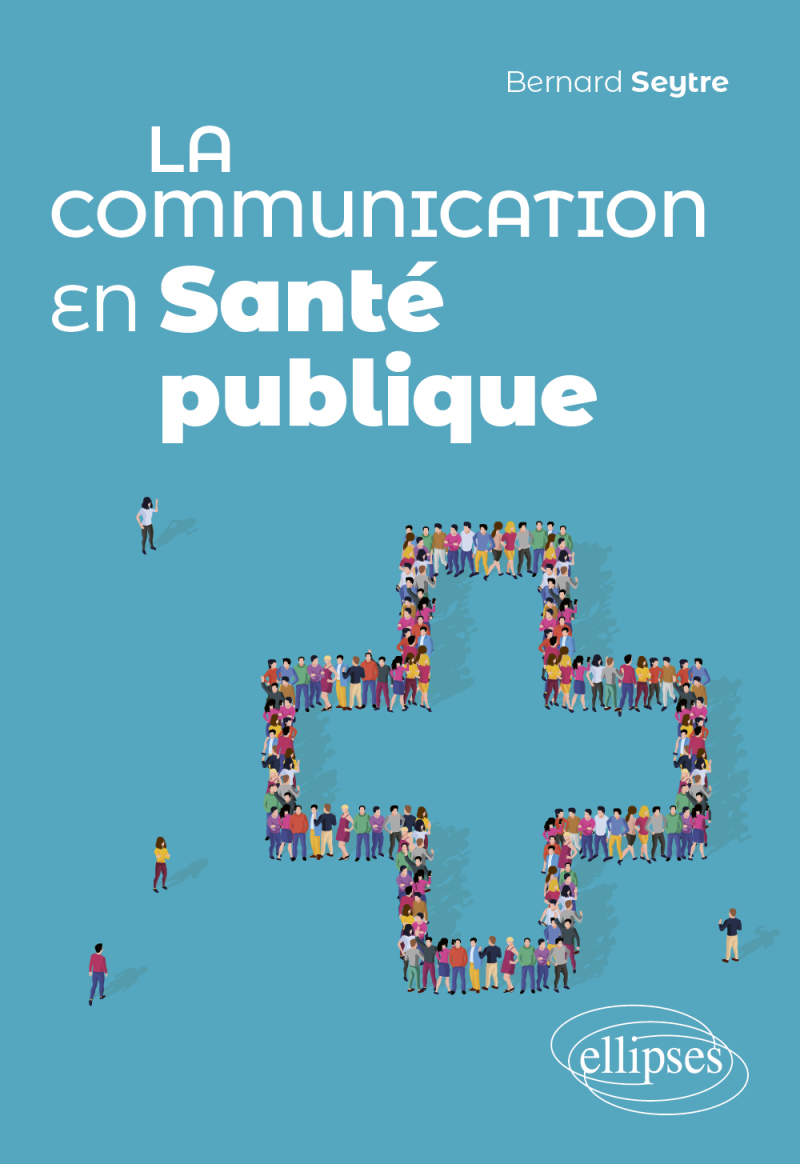
La communication en santé publique
Ellipses, 2025
The book: presentation and orderingArticles and book chapters
Une communication pour gagner l'adhésion
Manuel d'épidémiologie de terrain, John Libbey Eurotext, 2026 · Sous presse.
The difference between COVID-19 vaccine intent and uptake is not associated with exposure to misinformation
Discover Public Health 22, 2025
LinkShould we be Afraid of an Infodemic?
Health Behavior Research, Vol. 8: No. 3, 2025
Article (DOI)La campagne d'éradication de la poliomyélite mise en échec par les rumeurs
Le pédiatre, 320, 2024
Freins et réticences à la vaccination pédiatrique et contre le Covid-19 : résultats d'une enquête au Niger
Médecine Tropicale et Santé Internationale, 2024 · With S. Chaibou, E. Chabot and B. Simon.
Article (DOI)The drivers of low EPI and COVID-19 vaccination: results of a study in Niger
American Journal of Tropical Medicine and Hygiene, 00(00), pp. 1–5, 2024 · With S. Chaibou and B. Simon.
Article (DOI)Abstract
Vaccination adherence involves the expected benefit of a vaccine and the perceived risk of the disease. To develop an evidence-based communication strategy aimed at improving vaccination coverage in Niger, we conducted a mixed socio-anthropological study of the perceptions among the population on the benefit and the risk of the childhood (Expanded Program on Immunization) and the COVID-19 vaccines. Our results show that negative rumors are not a significant driver of vaccine refusal. The insufficient level of fully vaccinated, compared with partially vaccinated, children might be explained by misunderstandings around the side effects of vaccines and the necessity for full vaccination. Approximately one-fourth of the population is vaccinated against COVID-19, whereas 73.3% think that vaccines against the disease are a “good thing,” and 83% of those who have heard messages promoting the vaccination approve of them. This apparent contradiction is explained by a low perception of the risks of COVID-19. More than half of the population surveyed believe that the disease is not present in the country. A large majority believe that only ill people can transmit the disease, whereas only 12.8% think they know anybody who has ever been sick with COVID-19. Three-fourths of the interviewees have seen images from around the world of persons sick or deceased from COVID-19; the same proportion has not seen any such images of affected patients in Niger. Communication to improve COVID-19 uptake should focus on the reality of the disease presence and its transmission and not on rumors surrounding the vaccines.
Échec de la campagne d'éradication de la poliomyélite : on ne vaccine pas sans adhésion
Médecine Tropicale et Santé Internationale, 2023
Article (DOI)Vaccine Refusal: A Major, Underestimated Obstacle for the Poliomyelitis Eradication Initiative
American Journal of Tropical Medicine and Hygiene, 2023
LinkPour une communication basée sur la culture en santé (health literacy) des populations
Médecine Tropicale et Santé Internationale, 2022
LinkMisunderstanding the poor adherence to COVID-19 vaccination in Africa
Lancet Global Health, 2022 · 00181-4)
Article (DOI)Public perceptions, more than misinformation, explain poor adherence to proven COVID-19 control measures
American Journal of Tropical Medicine and Hygiene, 2022
Article (DOI)Abstract
Since the beginning of the COVID-19 pandemic, there has been a profusion of studies and webinars on the infodemic (the rapid diffusion of information on the internet). The infodemic is often cited as a key factor in the lack of adherence to COVID-19 preventive measures, including vaccination. A study we conducted in West Africa questions the reality of this impact: the majority of people who do not adhere to the preventive measures draw their opinion from their own experience, not from what they have viewed or read on social networks. Historically, resistance to public health messages and interventions, including vaccination, existed before the advent of the Internet. Studying the perceptions of the population and not only the circulation of information is necessary to fully understand the lack of adherence to the COVID-19 preventive measures and to build an effective communication strategy.
Une enquête socio-anthropologique à l'appui de la communication sur le Covid-19 en Afrique de l'Ouest
Médecine Tropicale et Santé Internationale, 2021 · With collaborators.
Article (DOI)Revisiting COVID-19 communication in Western Africa, a health literacy-based approach to health communication
American Journal of Tropical Medicine and Hygiene, 2021 · With collaborators.
Article (DOI)Abstract
Adherence to protective measures is a major component of COVID-19 epidemic control. COVID-19 health literacy is a major driver of this adherence, and the evaluation of health literacy levels is the basis for designing an effective communication strategy. We conducted a quantitative socio-anthropological study of the knowledge of the severe acute respiratory syndrome coronavirus 2 (SARS-CoV-2) infection and perception of the prevention messages in Burkina Faso, Cabo Verde, Guinea-Bissau, Ivory Coast, and Sierra Leone. There are widespread erroneous ideas regarding the transmission of and the protection against COVID-19. The majority of people are unaware that asymptomatic individuals can transmit the virus. Knowledge of the risk factors for severe disease is not sufficient, and the majority of individuals fear contracting COVID-19 by visiting a health center. Our study also shows the achievements of communication campaigns on several aspects: almost everybody has heard of the virus and heard or read the messages on the protective measures and a large majority of people think that these measures are effective against COVID-19. Based on these results, we propose a communication strategy that will emphasize that asymptomatic individuals can transmit the virus, emphasize the risk factors, reassure individuals regarding the safety of frequenting health centers, and design specific messages targeting young populations.
Les enjeux de la communication sur la tuberculose en Côte d'Ivoire
Santé Publique, vol. 33, n°3, 2021 · With collaborators.
LinkChanger de paradigmes de communication sur le VIH en Afrique
Médecine Tropicale et Santé Internationale, 2021 · With collaborators.
Article (DOI)Erroneous Communication Messages on COVID-19 in Africa
American Journal of Tropical Medicine and Hygiene, 2020
Article (DOI)Côte d'Ivoire : la désinformation des manuels scolaires sur l'infection à VIH
Bulletin de la Société de Pathologie Exotique, 2019
LinkRevisiting ebola communication
Virol Res Rev, vol. 1(3): 1-4, 2017
Article (DOI)Les errances de la communication sur la maladie à virus Ebola
Bulletin de la Société de Pathologie Exotique, 2016
LinkTime to change Ebola communication
African Affairs, 2015 · Letter to the editor.
LinkVacciner, c'est convaincre
Santé Internationale, Les enjeux de la santé au Sud, Les Presses de SciencesPo, 2011
La poliomyélite
Dictionnaire de la pensée médicale, Presses Universitaires de France, 2004
Le sida
Dictionnaire d'histoire et de philosophie des sciences, Presses Universitaires de France, 1999
Sida, histoire et polémiques : le syndrome de l'amnésie acquise
Le Sang, Pau, 1995 · Proceedings of the 11-12/06/93 symposium
Books
Public Health Communication
Elsevier, 2026 · in press.
La communication en santé publique
Ellipses, 2025
LinkQuand d'autres hommes peuplaient la terre, nouveaux regards sur nos origines
Flammarion, 2008 · With J.J. Hublin
Les sentinelles de la vie. Le monde des vaccins
Albin Michel, 2006 · With J.J. Bertrand and P. Saliou
Histoire de l'éradication de la poliomyélite
Presses Universitaires de France, 2004 · With M. Shaffer. Also published in English: The Death of a Disease, Rutgers University Press, 2005.
Histoire de la recherche sur le sida
Presses Universitaires de France, 1995 · Que sais-je ? Also published in Japan.
Sida, les secrets d'une polémique
Presses Universitaires de France, 1993
Conference presentations
A socio-anthropological study on EPI and Covid-19 vaccination in Niger – March 2023
Actualités du Pharo, 2023 · With collaborators, October 6, 2023
A Communication Strategy on COVID-19 based on a socio-anthropological survey conducted in 5 ECOWAS countries
CPHIA, Kigali, 2022 · With B. Fall, poster, December 13-15, 2022
Communication based on representations
Actualités du Pharo, 2022 · October 7, 2022
Communicating to raise awareness and mobilize the population: a health literacy approach
REMPART Epidemic, 2022 · April 21, 2022
The challenge of vaccine adherence
AFRIHEALTH, 2021 · April 2, 2021
What is a health literacy approach? Starting from people's knowledge to change behaviors
Emerging Infectious Diseases Seminar, Val de Grâce, 2019 · March 27, 2019
Communication to build trust: lessons learned from Ebola Virus Disease in West Africa
Regional workshop on validation of the situation analysis and capacity building on risk communication in the ECOWAS region, Abuja, 2017 · July 11-14, 2017
Lessons from the Ebola crisis and proposal for a communication strategy for population adherence
SAA 3rd Symposium 2016, Accra, 2016 · August 2016
Lack of population awareness: A major obstacle to public health programs in Africa/Experience from ASEAN
ASEAN-Africa: Towards a Renewed Partnership, Chulalongkorn University, Bangkok, 2016 · January 29, 2016
Anthropology supporting awareness, education and crisis communication strategy in Togo
EBODAKAR2015, 2015 · With A. Awesso and A. Gnassingbé
AIDS, history and controversy: the acquired amnesia syndrome
Le sang symposium, Pau, 1993 · June 11-12, 1993
Profiles : ORCID · Google Scholar · ResearchGate
A mission, a course, a talk?
Ministries of Health, international organizations, NGOs, universities: let's discuss your project.